Table of contents
Subscriptions sound like the perfect 2026 growth lever: steadier revenue, better forecasting, and a customer base that comes back without being re-acquired every month.
But the brands that win with subscriptions aren’t the ones that “add a subscription app.” They’re the ones that treat subscriptions like a product—with a clear promise, a clean experience, and a retention plan that starts on day one.
This article walks you through how we set up subscriptions on Shopify for EU-focused brands how to choose the right model, price it so margin survives month three, and reduce churn without turning your offer into a discount machine.
The insight: what will matter most in 2026
As we move into 2026, two forces shape subscription performance more than anything else.
First, customers expect control. They want to skip, pause, reschedule, or swap products without talking to support. If they feel locked in, they cancel.
Second, profitability pressure is real. Acquisition costs don’t magically go down, shipping doesn’t get cheaper, and returns don’t disappear. A subscription that grows revenue but destroys margin is not a growth engine—it’s a liability.
So the goal isn’t “recurring revenue.” The goal is recurring revenue that stays profitable.
Start with the offer (before apps)
If you get the offer wrong, no tool will save you.
If you get the offer wrong, no tool will save you.
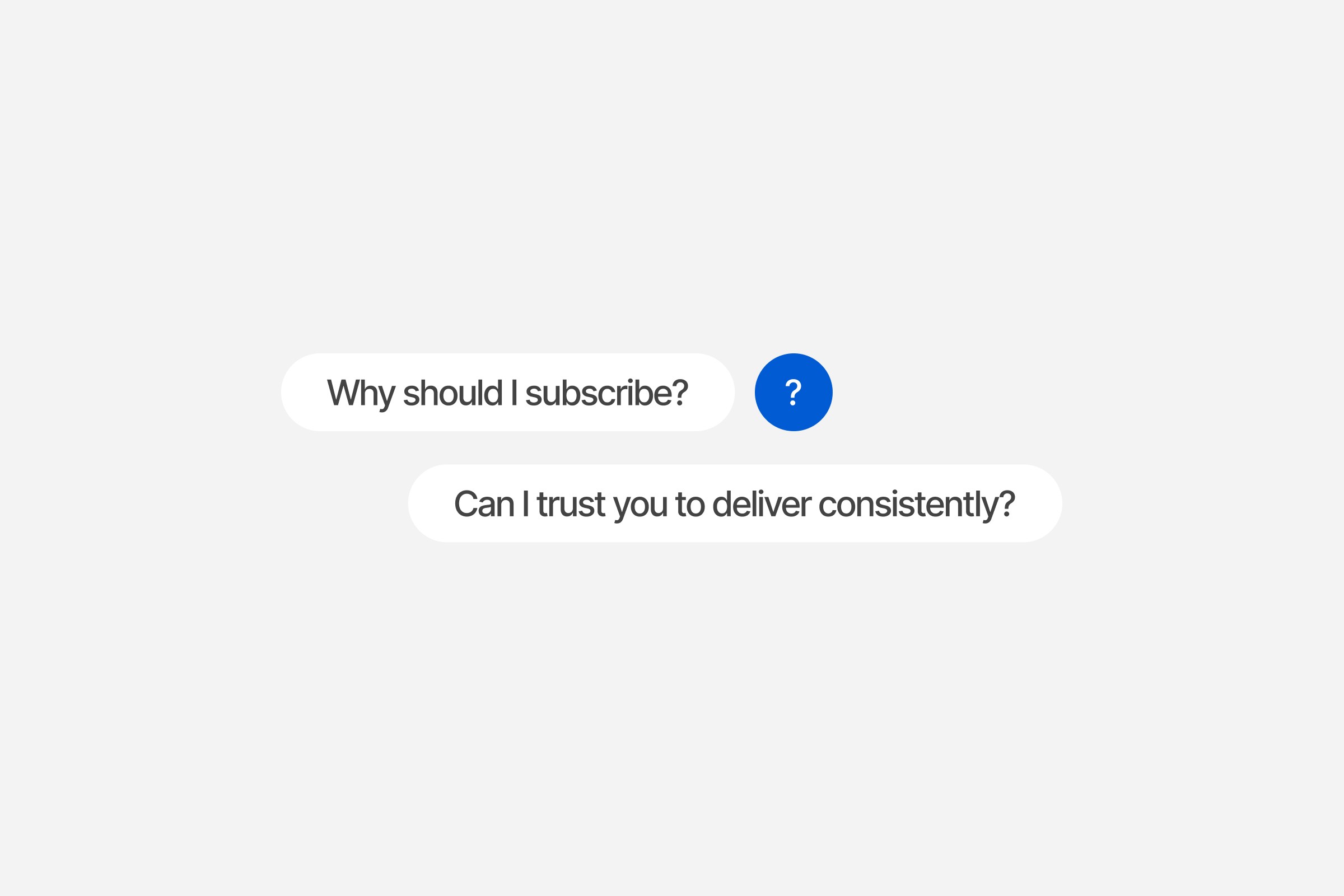
A strong subscription offer answers three questions in plain language:
Why should I subscribe instead of buying once?
What happens if my needs change?
Can I trust you to deliver consistently?
When you should not launch subscriptions (yet)
Subscriptions magnify operational weak spots. If you’re struggling with stockouts, inconsistent delivery times, or high refund rates, fix those first.
Also: if your product isn’t naturally repeatable, you may be forcing a model that customers don’t actually want.
The 3 subscription models that work best
1) Replenishment (Subscribe & Save)
Best for products people run out of: coffee, supplements, skincare basics, pet products, household goods.
Your edge here is simplicity. Customers should immediately understand what they’ll get, when it arrives, and how to change it.
2) Curated / Build-a-box
Best for categories where variety matters: snacks, beauty, grooming, baby, pets.
The winning mechanic is control: let customers adjust the next shipment. If they can swap items, they’re less likely to cancel when tastes change.
3) Membership / perks
Best when the “product” is access: free shipping, early drops, exclusive bundles, member-only pricing.
This can be powerful, but only when the perks are used monthly. Otherwise it becomes a “cancel after the first benefit” program.
How to pick the right model
A useful rule: match the subscription to the repurchase pattern.
If customers reorder the same SKU every 30–45 days, replenishment is your baseline. If they want novelty, build-a-box is stronger. If your brand runs limited drops or has a loyal fanbase, membership can unlock higher retention.
Set it up on Shopify (clean implementation path)
Shopify has made subscriptions much more “first-class” than they used to be. That’s good news for stability, supportability, and long-term scalability.
Still, brands typically face the same decision: do you launch with a lightweight setup to validate demand, or do you build a richer experience from the start?
When a lightweight setup is enough
If you’re launching a straightforward replenishment offer (one SKU, one frequency range, simple discount), a minimal setup can be a smart MVP.
In practice, this means:
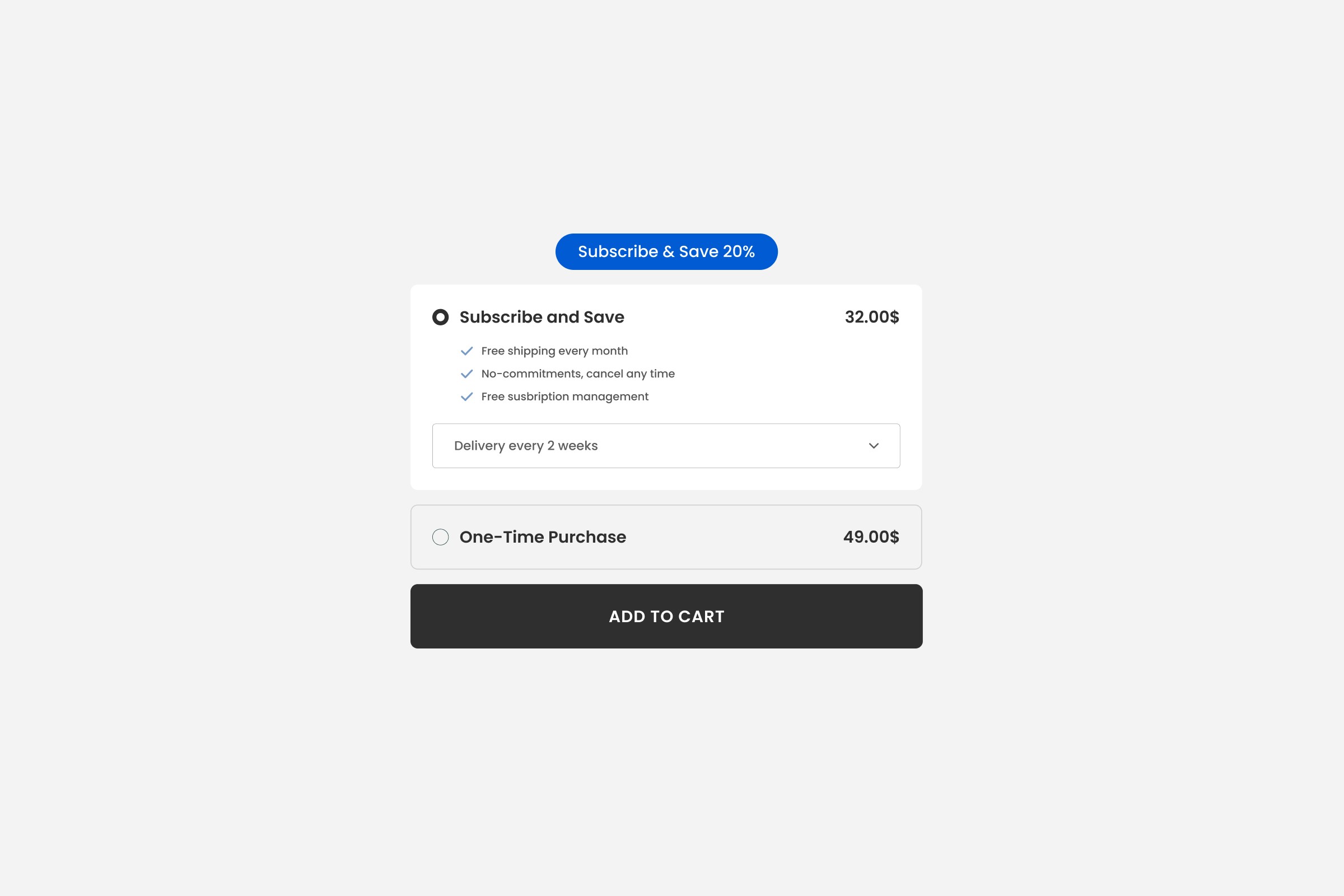
Clear subscription option on the product page
A small set of delivery frequencies
Customer can manage the subscription without contacting support
When you need a dedicated subscription solution
If you need any of the following, you’ll outgrow a minimal setup quickly:
A branded customer portal that reduces support load
Build-a-box or swap mechanics
More advanced plan logic (bundles, tiering, thresholds)
Multi-market nuances (currency, language, shipping rules)
This is where implementation quality starts to matter as much as the offer itself.
Why we implement with Juo for EU brands
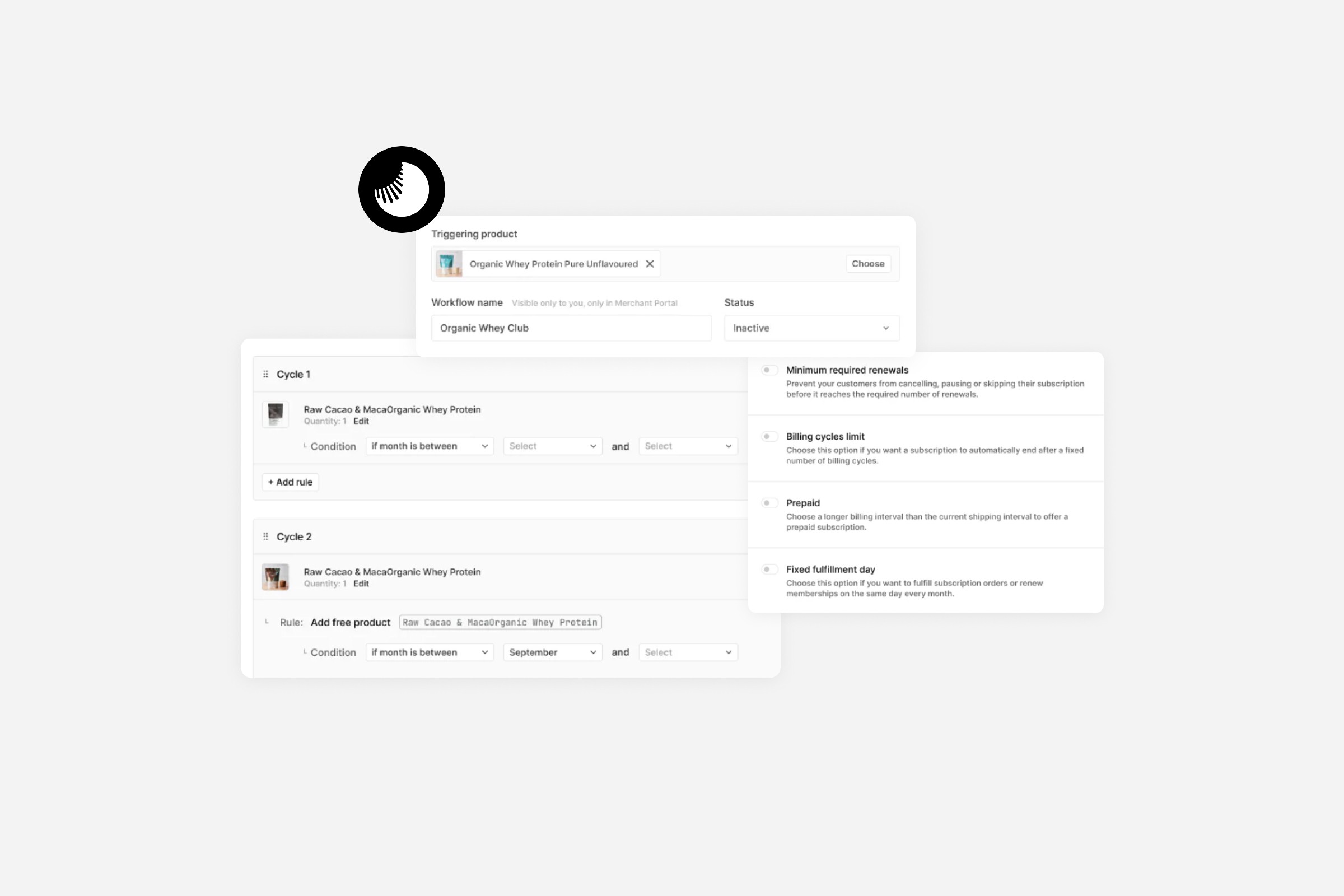
We’re in strong cooperation with Juo, one of the most popular subscription solutions across the EU.
The reason isn’t “more features.” It’s that subscriptions succeed or fail in the details: how the widget communicates value, how management feels, how easy it is to change a plan, and how smoothly operations can support the promise.
In EU markets, these details matter even more because customers are sensitive to transparency, delivery reliability, and support responsiveness.
When we implement subscriptions with Juo, the focus is typically:
A clear subscription widget that doesn’t confuse one-time buyers
A customer portal that makes self-service the default
Flexible plan structures (especially for curated/bundled models)
A setup that fits multi-market realities, not just a single-country store
Subscription UX that converts (PDP → cart → checkout)
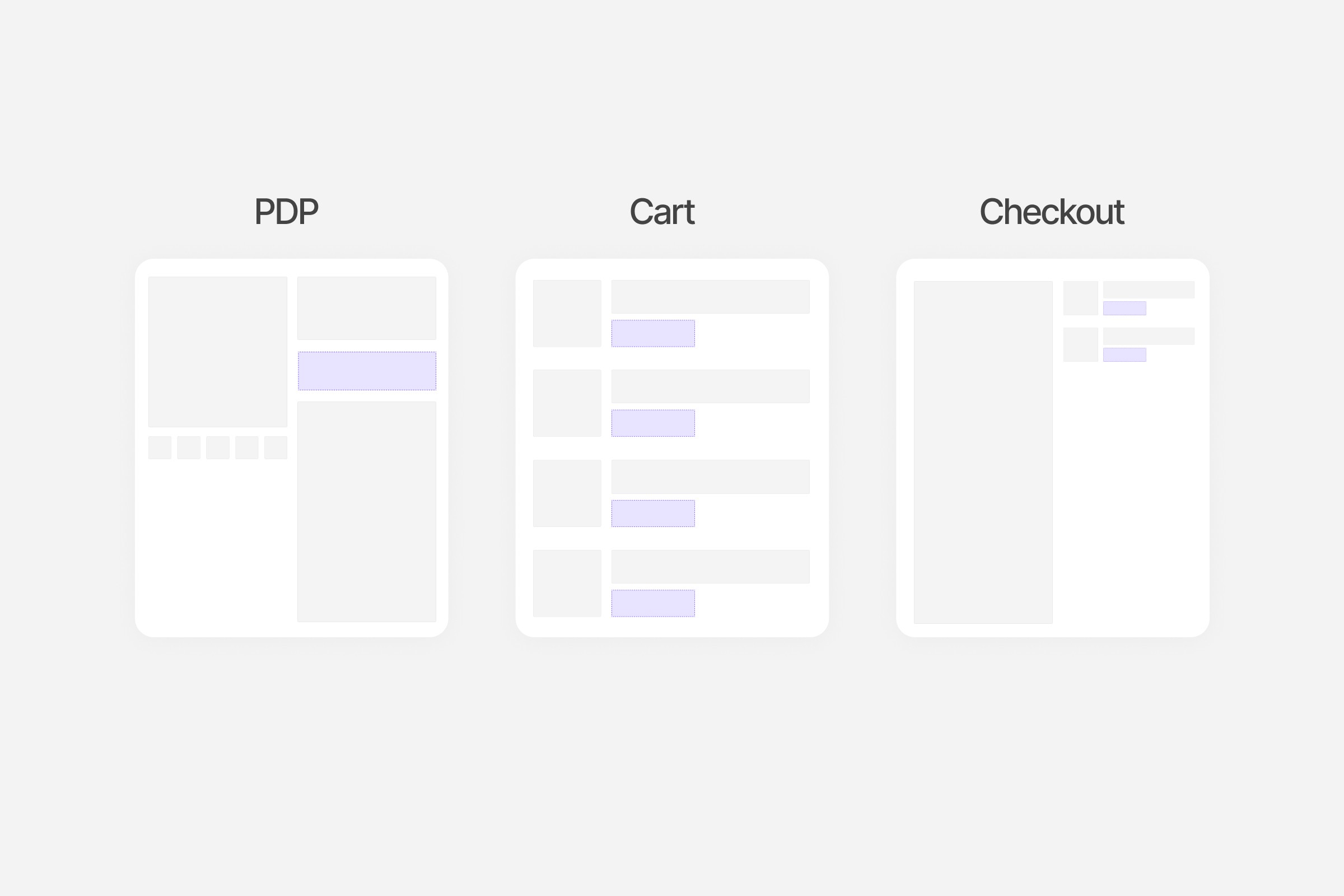
Subscriptions often underperform for one reason: the experience is designed for the merchant, not the customer.
Your subscription UX has one job: make the decision feel safe.
Make “subscribe” easy to understand
Avoid vague copy like “Subscribe for savings.” Be specific.
For example:
“Deliver every 30 days. Skip anytime.”
“Save 10% on every order. Change products before each delivery.”
“Free shipping for members + early access to drops.”
The point is to remove uncertainty. When customers aren’t sure what happens next, they default to one-time purchase.
Use frequency as reassurance
More options don’t always increase conversion. Too many frequencies can create decision fatigue.
Start with what your data already tells you: what’s the typical reorder window? Offer two or three sensible choices around that.
Make flexibility visible before purchase
Flexibility should not be buried in an FAQ.
If customers can skip, pause, or reschedule, show it next to the subscription option—because flexibility is a trust signal, not just a feature.
Keep checkout clean
The best subscription checkout doesn’t feel special. It feels normal.
Your job is to remove surprises:
easy access to support
no hidden minimum terms
no confusing “contract language”
clear delivery expectations
Price it right (without killing margin)
Pricing is where many subscription programs quietly fail.
A subscription discount is not “free.” It’s a choice to trade margin for retention—and that trade only works when retention actually improves.
Use “join” vs. “stay” benefits
A simple approach:
Join benefit (stronger): makes the first subscription order feel like a smart decision.
Stay benefit (sustainable): makes the subscription worth keeping without eroding your contribution margin.
Example in practice:
Join: 15% off first subscription order
Stay: 5–10% off ongoing, plus flexible management (skip/pause/swap)
The key: don’t lock yourself into a generous permanent discount if you haven’t proven retention.
Prefer value over discount where possible
In many categories, small perks outperform bigger discounts.
early access to drops
free shipping threshold for subscribers
occasional “subscriber-only” add-on item
These are often cheaper than permanent margin loss.
Use shipping and prepay intentionally
Shipping can be the silent killer of subscription profitability.
If your product supports it, encourage:
less frequent, larger deliveries
prepaid plans (e.g., pay for 3 months upfront)
Prepay reduces churn risk and helps cash flow. Just make sure it’s positioned as convenience and value—not as a commitment trap.
Cut churn: the retention playbook
Churn is not one problem. It’s two.
Voluntary churn: customers choose to cancel.
Involuntary churn: payment fails, cards expire, banks decline.
You need a plan for both.
Reduce voluntary churn with flexibility (not desperation)
The fastest way to reduce churn is to let customers keep the subscription while changing the timing.
So build around:
skip next delivery
pause for a month
reschedule date
swap products (especially for curated models)
In practice, many cancellations are really “not now.” If your portal makes “not now” easy, churn drops.
Make the cancellation flow brand-safe
Aggressive cancellation tactics can backfire in EU markets. People don’t like feeling trapped.
A good cancellation flow is simple and respectful:
ask one question: “What’s the main reason?”
offer relevant alternatives (pause/skip/swap)
allow cancellation without drama
The goal is to learn, not to bully.
Control involuntary churn (payments)
Involuntary churn feels invisible until it’s not.
Your must-haves:
automated retries
clear customer notifications
easy card update
a graceful grace period before cancellation
Brands often recover meaningful revenue just by treating failed payments as a core workflow, not an edge case.
Operations that keep subscribers happy
Subscriptions create a promise: “You can rely on us.” Operations must keep that promise.
Inventory planning and substitutions
If you frequently stock out, subscriptions magnify frustration.
Two practical moves help:
reserve inventory for subscription shipments
define substitution rules (and communicate them clearly)
A subscriber who receives a surprise substitution without warning is a subscriber who cancels.
Fulfillment SLAs and proactive comms
Subscribers are less tolerant of delivery delays because they’re counting on you.
If delays happen, proactive communication matters more than speed:
set clear cut-off dates
confirm dispatch
communicate delays before customers ask
Customer care playbooks
Support needs scripts and escalation rules for subscription-specific issues.
For example:
“My order didn’t arrive” (logistics workflow)
“I want to change next month’s products” (portal guidance)
“I’m cancelling because it’s too much product” (offer frequency change)
When support can solve these quickly, churn goes down—and brand trust goes up.
Closing Thoughts
Subscriptions can be a reliable growth lever in 2026—but only if they’re built around clarity, flexibility, and sustainable pricing.
Treat operations and payment recovery as part of retention, not afterthoughts.
Lead with an offer customers instantly understand (what arrives, when, and how to change it).
Make skip/pause/reschedule visible before purchase—this is your best churn reducer.
Price for profitability: a stronger join incentive, a smaller stay benefit, and perks that don’t drain margin.
Written by
Chris Stola
Published in