Table of contents
Ad costs go up. Margins go down. At some point most DTC founders realise: it’s not a traffic problem anymore, it’s a revenue‑per‑visit problem.
Bundles and kits are a simple way to fix that. Done well, they:
lift average order value (AOV),
increase units per order, and
still protect your margin.
In this article we’ll look at which bundles work best for Shopify brands, how to price them safely, how to set them up, and how to check if they really make you more money.
Why Bundles & Kits Matter Right Now
Getting a visit to your store is more expensive than ever. Privacy changes, crowded ad auctions and growing competition mean you pay more for each click.
If each visit is expensive, you have two choices:
keep buying more traffic, or
earn more from the traffic you already have.
Bundles help with the second option. Instead of selling one product at a time, you package products together in a way that:
increases the basket size, because the customer buys two, three or four items instead of one;
improves inventory rotation, because you can pair slower products with bestsellers;
makes decisions easier, because the customer picks one bundle instead of several separate items.
A good bundle doesn’t just grow revenue. It grows profit per order. That’s the lens you want to use.
Types of Bundles & Kits That Work for DTC Brands
You can design bundles in many ways, but most successful DTC brands use a few simple patterns. You don’t need dozens of offers. Three to seven strong bundles are usually enough to see impact.
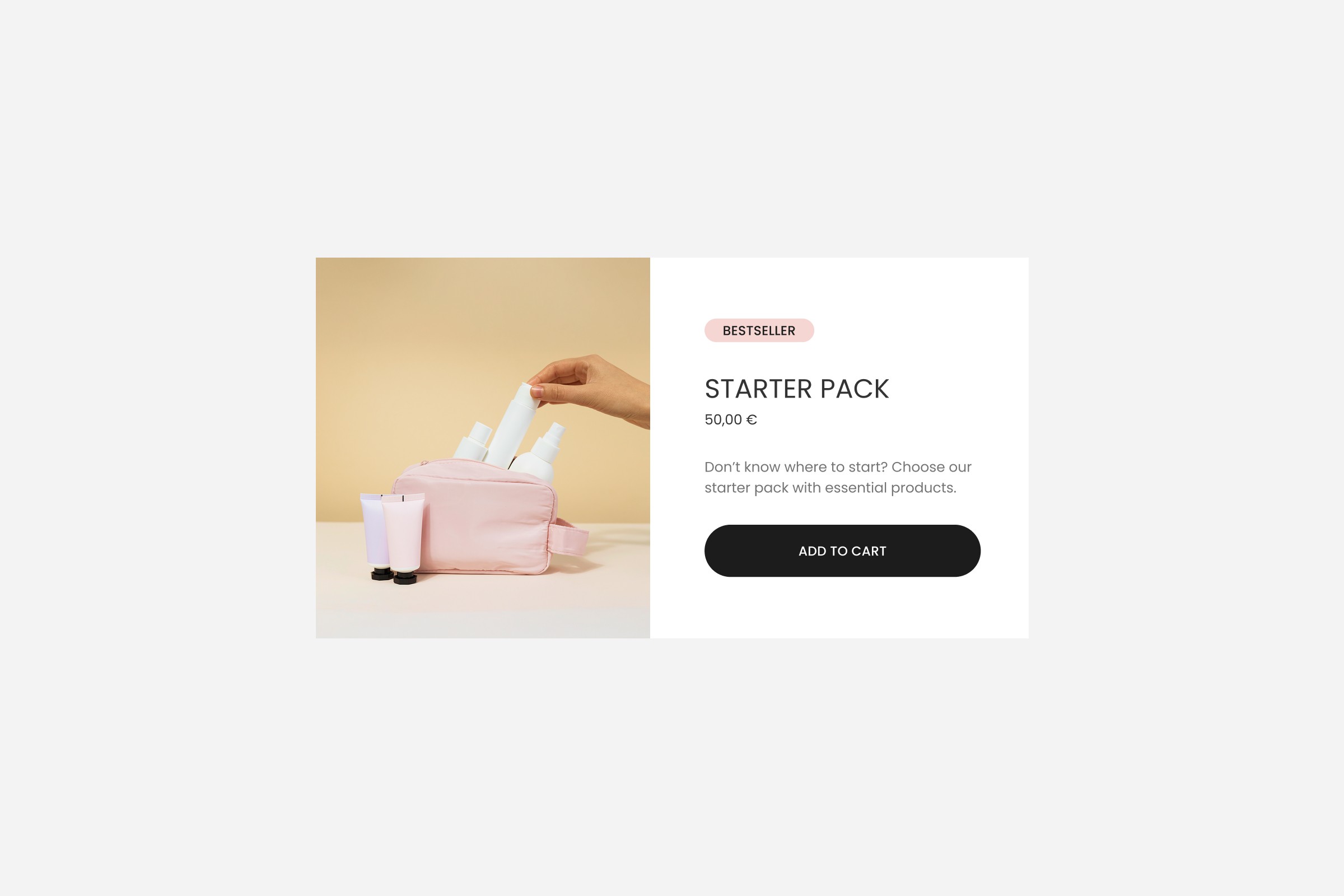
Starter / Essentials Bundles
Starter bundles are for new customers who like your brand but don’t know what to choose. The question they have in their head is: “If I want to try this brand properly, what should I buy?”
Think about a few simple examples:
a skincare brand offering a cleanser, serum and moisturizer as a basic routine;
a coffee brand pairing a grinder, beans and a brewing method;
an apparel brand combining a T‑shirt, underwear and socks into a basics pack.
These sets work well on product pages, in welcome emails and in campaigns aimed at first‑time buyers. They solve a complete use case, which makes the price easier to accept.
Multipacks and Volume Bundles
Multipacks are the simplest bundle type: two, three or six units of the same product sold together. You see them with supplements, drinks, pantry items and basics like socks or T‑shirts.
Customers understand the offer immediately: “Buy more, pay a bit less per item.” For the brand, multipacks improve shipping economics, simplify picking and packing, and increase basket value.
A simple rule of thumb for pricing multipacks:
offer a modest per‑unit discount rather than a deep cut;
make sure the total order still hits your target margin;
position multipacks as the natural choice for regular users.
Mix & Match / Build‑Your‑Own Bundles
Mix‑and‑match bundles let customers choose flavours, colours or patterns inside a clear frame. Instead of forcing them to buy three identical items, you say: “Choose any three products from this group.”
This works especially well for brands with many variants – snacks, drinks, cosmetics, accessories. The shopper feels the bundle is personal, while operations still see a clear set of items to ship.
On Shopify this often shows up as a section on the product page where the customer adds items to a "box" until they reach the required number. The price is usually fixed for the box size, which keeps everything easy to understand.
Themed Kits and Curated Sets
Themed kits are built around an occasion or a problem. You are not just selling three products; you’re selling a story:
“Holiday Gift Set”,
“Summer Essentials”,
“Post‑Workout Recovery Kit”,
“Work From Home Starter Pack”.
These sets are perfect for seasonal campaigns, gift landing pages and influencer collaborations. You can usually include at least one high‑margin product in the mix, which helps keep the overall bundle healthy.
Because you curate the kit, it also sends a message about your taste and expertise. The customer feels guided rather than pushed.
Subscription Bundles
Bundles can also sit on top of a subscription. Instead of sending one product every month, you send a kit: three coffee bags every four weeks, a monthly refill box of skincare, or a rotating snack box.
Here the main goal is higher lifetime value (LTV), not just a bigger first order. A subscription bundle that renews for six or twelve months often beats a one‑time high AOV purchase.
The key is clarity. Customers need to know:
how they can change, pause or cancel.
what they get each cycle,
how often it arrives, and
Margin‑Safe Bundle Design: Simple Rules That Protect Profit
Bundles are great for revenue but can be dangerous for profit if they are treated only as a marketing trick. It is easy to put “‑30% set” on a nice box and hope volume will fix everything. Usually it doesn’t.
A few simple rules keep you safe.
Start from Unit Economics, Not the Discount Badge
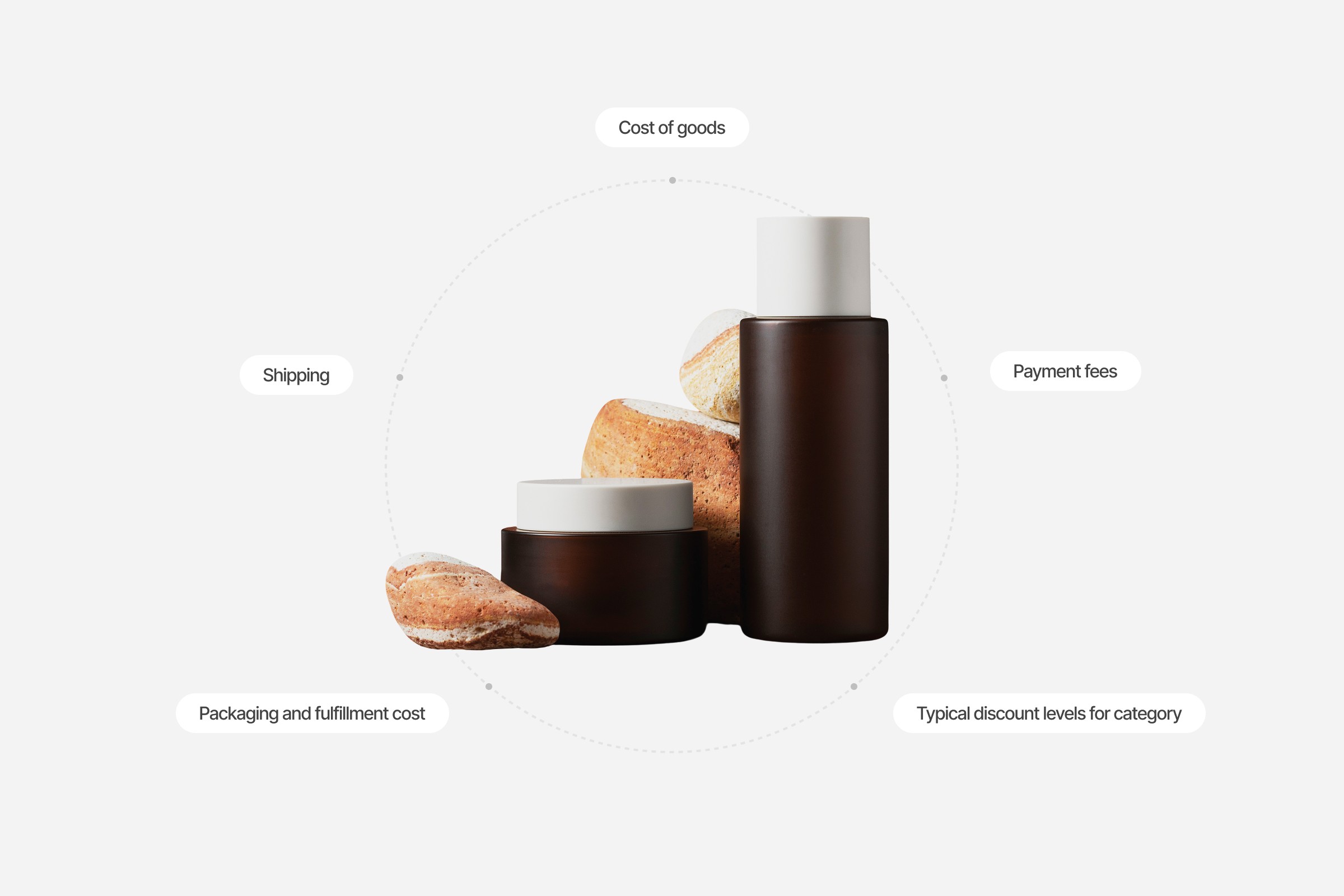
Begin with basics for each product:
cost of goods,
packaging and fulfilment costs,
shipping,
payment fees,
typical discount levels for your category.
Then ask: “How much profit do we need per average order for this brand to be healthy?”
Once you know that target, work backwards. If a regular order with one product brings you a certain profit, your bundle should bring at least the same profit, ideally more, even after the discount. If it doesn’t, the bundle is too generous.
Choose Smart Discount Ranges
For most brands, multipacks work with a small per‑unit discount. You reward customers who stock up without training them to expect huge cuts.
Starter kits can carry a slightly deeper discount. They often include higher‑margin items or introduce the customer to products they will later buy at full price.
In everyday sales, the discount on a bundle should feel fair but not extreme. If customers constantly see “30–40% off sets” outside of special events, they quickly learn to wait and your base prices start to look fake.
Use Bundles to Move Inventory – Without Dumping It
Bundles are a gentle way to move slow or seasonal stock without turning your store into an outlet.
For example, you can combine a best‑selling shampoo, a slower conditioner and a new hair oil into a complete routine. Priced sensibly, this feels like a thoughtful kit, not a clearance bin.
The customer gets a routine that makes sense. You move stock that might otherwise sit in the warehouse. The story of the bundle justifies the mix.
Set Guardrails for Margin
It helps to write down a few simple rules for your team, such as:
no bundle is sold below a certain gross margin;
low‑margin items can’t be the main hero of a bundle;
bundle discounts should not stack with big site‑wide codes.
Shopify lets you control how discounts combine, so a quick review of those settings before campaigns can save a lot of margin.
How to Implement Bundles & Kits on Shopify
You don’t need a headless build or a huge app stack to start with bundles. You just need to be clear about two things:
how the bundle should look for the customer,
how inventory should behave in the background.
Simple Bundles with Standard Products and Variants
For basic cases – like a three‑pack of the same product – the bundle can simply be its own product in Shopify.
You:
create a separate product,
set the title and description to explain it’s a pack of three,
price it as a pack,
handle it as its own SKU in the warehouse.
This is easy to set up and perfect for small catalogues or early tests. The trade‑off is that you have to watch stock levels for single units and packs so you don’t oversell.
Native Shopify Bundles and When to Use Apps
As your bundling strategy grows, you usually need better inventory sync and more flexible offer logic.
Shopify now offers native bundle features that let you create fixed bundles and multipacks directly in the admin. When a bundle sells, stock for each item inside is updated in real time. This is often enough for simple starter kits and gift boxes.
If you want customers to build their own boxes, use special pricing rules, or connect bundles deeply with fulfilment and 3PL systems, bundle apps become useful.
In practice:
high‑volume brands with multiple warehouses or wholesale channels often need an advanced setup and custom work.
smaller brands can start with native bundles and a few multipacks;
growing brands with more complex operations usually benefit from a bundle app;
UX Patterns: Where and How to Show Bundles
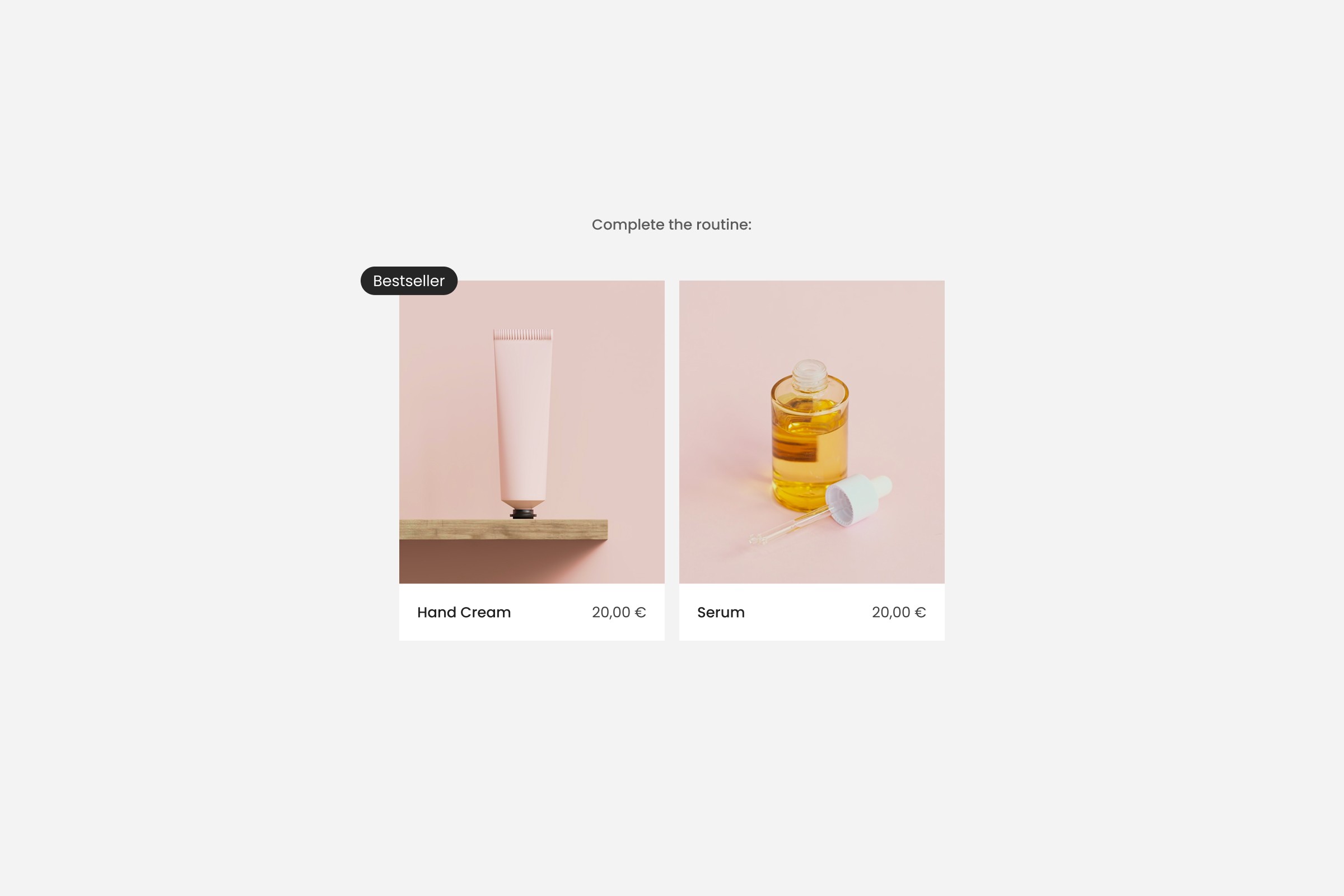
The same bundle can be a winner or a flop depending on where and how you show it. UX and placement matter as much as pricing.
Product Detail Page (PDP)
For many brands, the product page is where decisions happen. This is a natural place to offer bundles.
Instead of only showing the single product, you can add a simple module like “Complete the routine” or “Save with this set”. The section should clearly show:
what’s included,
separate prices vs bundle price,
how much the customer saves.
Keep the layout clean. If the main product is buried under complex configuration, people will leave. Think of the bundle as a clear upgrade path, not a second catalogue.
Collection Page (PLP)
Collection pages are great for highlighting a few key bundles between single products. A tile marked “Starter Kit” or “Best value” can stand out and attract customers who are ready to spend more but don’t want to build their own combo.
Avoid turning whole collections into bundle‑only grids. Returning customers still want quick access to single products. A mix of hero SKUs and a few strong bundles keeps the page friendly for both groups.
Cart and Checkout
In the cart, you want to keep things light. This is the right place for a gentle suggestion, not a full builder.
Examples:
“Turn this into a 3‑pack and save X%”,
“Add this care kit to protect your purchase”.
Any offer here should be one click to understand and one click to add. If it feels like work, it will hurt conversion.
Post‑Purchase and Email
Bundles don’t have to live only on the storefront.
After a first order, email flows can present a simple bundle that extends what the customer already bought – a full routine, a refills pack, or a giftable set.
Post‑purchase upsell screens can also offer to upgrade the order to a bundle while the transaction is still fresh. Used in a subtle way, this can add meaningful revenue without feeling aggressive.
How to Measure Whether Bundles Actually Work
A bundle is successful only if it improves your numbers. The good news: you can keep the analysis simple.
Start by tracking, for orders that include at least one bundle:
Average order value (AOV) vs your store‑wide AOV;
units per order;
gross margin per order;
share of orders with bundles.
You can tag bundle products or orders in Shopify to make these reports easier.
Then look at behaviour over time. Good signs include:
many first‑time buyers starting with a bundle and later buying single items at full price;
bundle buyers coming back without needing deep discounts;
healthy margins on bundle orders even during campaigns.
If bundles mainly attract only heavy discount seekers who buy once and disappear, it’s a signal to adjust pricing, messaging or placement.
Common Mistakes With Bundles – and How to Avoid Them
When bundles underperform, it is usually because of a few recurring issues. The upside: once you know them, they are easy to avoid.
The most common problems are:
Confusing UX and policies. If customers aren’t sure what’s inside, how much they really save, or how returns work, they hesitate. Clear copy and transparent rules fix most of this.
Too many options in one bundle. If choosing a bundle feels like configuring a car, people give up. Limit choices and keep the structure clear.
Discounts that are too deep. Big cuts are fine for special campaigns or stock clearance, but if they become normal, you train customers to wait and crush your margin.
No clear story. A random mix of products with no obvious use case looks like a warehouse clean‑up. Every bundle should answer a simple “when and why” question.
Operational headaches. If stock isn’t synced between bundles and single products, you risk overselling or shipping incomplete orders. Choose an implementation that fits your operations.
Closing Thoughts
Bundles and kits are not a quick gimmick. When you design them with margin in mind, they become a long‑term growth lever: they raise AOV, increase units per order, keep inventory moving and make shopping easier.
You don’t need a catalogue full of complex sets. A handful of well‑positioned starter kits, multipacks and themed bundles – backed by simple unit economics and clean UX – can already move the needle.
If you want to explore how bundling could work for your brand – from pricing and product structure through to Shopify setup and UX – the Hyper Effekt team can help you design and launch a bundle strategy that lifts AOV without killing your margin.
Written by
Chris Stola
Published in